
WELCOME BONUS 300%
UP TO €2000 + 100
FREE SPINS
UP TO €2000 + 100
FREE SPINS
Home → Blackjack
Blackjack at Spinaway Casino: Variants, Rules and Payouts
Soft Hand and Hard Hand Practically Distinguished
The distinction between a soft hand containing an Ace and a hard hand without one dictates the mandatory action for Blackjack 6 Decks, S17, DAS, DOA variants found at Spinaway Casino. A soft hand allows doubling on any two cards without risking immediate bust, whereas a hard ten or eleven requires specific hit or stand decisions based on the dealer's upcard. This mechanical difference influences the base strategy adherence required to achieve the stated 99.54% RTP for this specific table configuration.
Infinite Blackjack from Evolution utilizes unlimited seats and pays out at 99.47% RTP, contrasting sharply with the fixed-seat constraints of standard tables. The live dealer game includes side bets like Any Pair and 21+3, which alter the fundamental decision-making process for soft versus hard totals. Players must adjust their basic strategy charts when these additional wagering options are active, as the house edge increases significantly for those specific bet types.
Lightning Blackjack by Evolution introduces multipliers up to 25x on winning hands, affecting the expected value of both soft and hard outcomes differently. With a 99.56% RTP, this variant offers higher volatility compared to the standard 99.54% game due to the random multiplier application. The presence of these multipliers means that a single correct decision on a soft hand can yield substantially higher returns than a standard payout structure would allow.
Double Down vs Simple Hit on 11
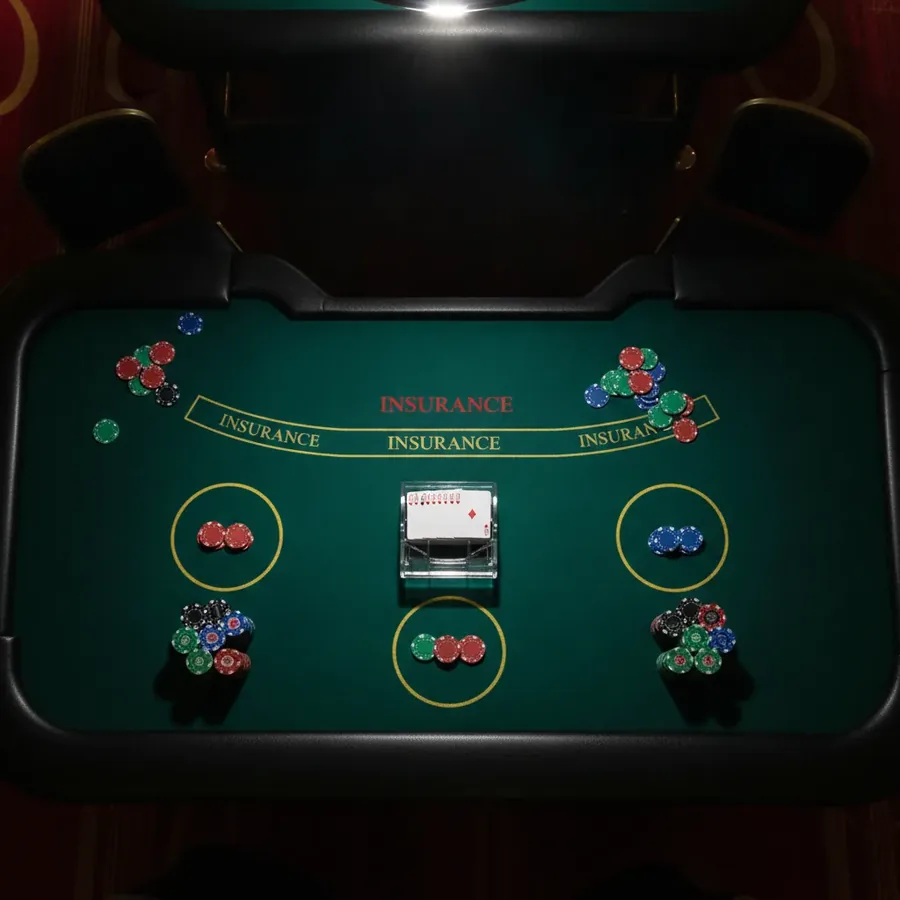
Doubling down on a hard eleven against a dealer six is the most profitable move in Blackjack 6 Decks, increasing the average return per hand significantly. This action doubles the initial wager but capitalizes on the high probability of drawing a ten-value card, thereby maximizing the advantage over the dealer's weak upcard. The rule allowing double after split further enhances this opportunity, permitting players to apply this aggressive strategy even after splitting pairs.
Simple hitting on eleven yields a lower expected value compared to doubling, especially when the dealer shows a seven or higher. In the Infinite Blackjack variant with a 99.47% RTP, sticking to basic strategy ensures the player maintains the mathematical edge provided by the liberal rules. Deviating to a simple hit reduces the long-term return, effectively transferring value back to the house edge inherent in every casino game.
Comparing the two approaches reveals that doubling on eleven contributes to the overall 0.46% house edge for the standard 6-deck game. If a player opts for a simple hit instead, they forfeit potential winnings that would have contributed to the 99.54% RTP figure. This strategic choice directly impacts the bankroll management required to meet the 10% contribution rate towards bonus turnover requirements for table games.
Splitting costs double bet: plan budget
Splitting pairs requires placing a second bet equal to the original wager, immediately doubling the financial exposure for that specific hand round. This mechanic is central to the Blackjack 6 Decks, S17, DAS, DOA game, where resplitting Aces is permitted under strict conditions. Players must ensure their bankroll can sustain multiple simultaneous bets without exceeding the table limits of 1,000 EUR for games like Blackjack Party.
Resplitting Aces improves the RTP by approximately 0.08 percentage points, offering a slight mathematical advantage to the player who follows optimal strategy. However, this benefit comes at the cost of increased variance and the necessity of funding multiple hands simultaneously during a single dealing phase. The ability to resplit adds complexity to budget planning, as the total amount risked can escalate rapidly if multiple pairs are encountered consecutively.
Standard splitting rules apply across various live dealer tables, including Lightning Blackjack which allows unlimited players but maintains strict betting boundaries up to 2,500 EUR. When splitting, players must manage their session funds carefully to avoid depleting their balance before achieving the desired number of splits. This budgetary constraint is particularly relevant given that table games only contribute 10% towards the wagering requirements of the welcome bonus.
Blackjack Payout 3:2 Explained in Detail
A natural blackjack paying 3:2 returns 150 EUR for every 100 EUR wagered, providing a significant boost to the player's expected return over time. This favorable payout structure is a key component of the 99.54% RTP found in the standard 6-deck game at Spinaway Casino. Maintaining this ratio is essential for preserving the low 0.46% house edge associated with optimal play using basic strategy.
Games offering a 6:5 payout only return 120 EUR for a 100 EUR bet, increasing the house edge by exactly 1.39 percentage points. This detrimental change makes the game mathematically inferior, raising the effective house edge to 1.85% compared to the standard 0.46%. Players should actively seek out 3:2 tables to minimize losses and maximize the potential profitability of their gaming sessions.
The Liberal Vegas Strip variant achieves an impressive 99.72% RTP by combining the 3:2 payout with other favorable rules like late surrender. This combination represents the most advantageous scenario for players, offering the lowest possible house edge of just 0.28%. Securing access to such tables is crucial for serious players aiming to optimize their long-term results within the available game portfolio.
Ignored Basic Strategy Chart: 1 Percent Wasted
Ignoring the basic strategy chart for Blackjack 6 Decks, S17, DAS, DOA can increase the house edge from 0.46% to well over 1.00%. This deviation wastes potential winnings that would otherwise be secured through mathematically correct decisions on every hand dealt. Adhering strictly to the chart is mandatory to achieve the advertised 99.54% RTP and maintain a competitive advantage over the dealer.
In live dealer environments like Infinite Blackjack, deviating from basic strategy similarly erodes the 99.47% RTP, leading to faster bankroll depletion. The presence of side bets does not excuse poor primary game decisions, as the core strategy remains the foundation for long-term profitability. Players who fail to use the chart effectively lose approximately one percent of their total wagered amount back to the house.
Even with liberal rules like those in the Vegas Strip variant yielding 99.72% RTP, incorrect plays still result in significant financial losses. The standard deviation of 1.15 indicates moderate volatility, meaning short-term results may vary, but long-term adherence to strategy is critical. Without it, the theoretical advantage vanishes, turning a low-edge game into a high-cost entertainment option with unfavorable odds.
Blackjack variants at a glance
| Variant | Payout | House edge | Rule | Bet range |
|---|---|---|---|---|
| Blackjack Split / Double / H17 – Regel-Effekte | n.a. (Regel-Modifikatoren) | H17 +0.22 Prozentpunkte; RSA −0.08 Prozentpunkte; DAS −0.14 Prozentpunkte | Dealer Hits Soft 17 verschlechtert RTP um 0.22 Prozentpunkte; Resplit Aces verbessert um 0.08 Prozentpunkte; Double After Split verbessert um ca. 0.14 Prozentpunkte; 6 Decks statt 8 – ca. 0.02 Prozentpunkte. | Double – Einsatz ×2 mit einer Karte; Split – bis 4 Hände; Ass-Split meist mit einer Karte. |
| Blackjack Ein Deck, klassische Regeln, 3:2 | 99.85% | 0.15% | Weniger Decks = niedrigerer Vorteil; ein Deck gibt ca. −0.48 Prozentpunkte gegenüber 8 Decks. Oft durch 6:5 Auszahlung kompensiert. | Blackjack 3:2, Gewinn 1:1 |
| Blackjack Insurance / Versicherung (6–8 Decks) | 92.53% | 7.47% | Separate Nebenwette bis 50% der Hauptwette, wenn der Dealer ein Ass hat. Basisstrategie schreibt IMMER Ablehnung vor (außer Karten zählen bei True Count ≥ +3). Bei einem Deck Vorteil ≈ 5.88% | Insurance 2:1 |
| Blackjack 6 Decks, S17, DAS, DOA, Auszahlung 3:2, Basisstrategie | 99.54% | 0.46% | Dealer steht auf Soft 17; Verdopplung auf jeder Zweierkarte; Verdopplung nach Split erlaubt; keine Aufgabe. Basisstrategie ist für diesen Wert zwingend | Blackjack 3:2, normaler Gewinn 1:1, Insurance 2:1 |
| Blackjack Liberal Vegas Strip (liberale Regeln, 3:2) | 99.72% | 0.28% | Günstigste Regelkombination: S17 + DAS + Resplit + Late Surrender. Standardabweichung 1,15 | Blackjack 3:2, Gewinn 1:1 |
| Blackjack Surrender (Late Surrender) – Regel-Effekt | n.a. (Regel-Modifikator) | −0.08 Prozentpunkte | Spieler gibt Hand nach Dealer-Blackjack-Prüfung auf, verliert die Hälfte des Einsatzes. Verbessert RTP um ca. 0.08 Prozentpunkte. Early Surrender ist wesentlich wertvoller (bis −0.6 Prozentpunkte), aber extrem selten. | Rückzahlung 50% des Einsatzes |
Side Bets Increase House Edge to 5 Percent
Infinite Blackjack offers four side bets including Any Pair and Hot 3, which significantly alter the expected return compared to the main game. While the base RTP stands at 99.47%, adding these optional wagers pushes the overall house edge well above the standard threshold for table games. Players must weigh the excitement of multipliers against the mathematical certainty of higher long-term losses.
The Lightning Blackjack variant introduces multiplier cards that can award up to 25x on winning hands, yet the underlying RTP remains at 99.56%. These special features attract attention but do not compensate for the increased volatility inherent in high-variance side markets. The potential for large payouts is balanced by a lower frequency of wins compared to standard play.
Insurance is a separate side bet available when the dealer shows an Ace, paying 2:1 if the dealer has blackjack. This specific wager carries a steep house edge of 7.47% and an RTP of only 92.53%, making it one of the worst bets on the floor. Only card counters with a true count of +3 or higher should ever consider placing this wager.
Bonus conditions often exclude Blackjack completely
The welcome bonus provides 300% up to €2,000 plus 100 free spins, but contribution rates vary drastically across game categories. Table games such as Blackjack contribute only 10% toward the wagering requirement, whereas slots count at 100%. This means every €100 wagered on Blackjack adds just €10 to the turnover total needed to unlock funds.
Consider a scenario where a player deposits €200 and receives a €600 bonus, totaling €800 in playable balance. With a typical 40x wagering requirement on the bonus amount, the player must generate €24,000 in turnover. If playing exclusively at the table, they would need to place €240,000 in bets, which is statistically unlikely to survive variance.
The low contribution rate effectively excludes most table strategies from being viable for clearing the bonus. A player relying on basic strategy for Blackjack with a 0.46% house edge cannot overcome the slow accumulation of qualifying bets. It is far more efficient to use slot games for turnover while reserving table time for pure entertainment without bonus constraints.
Register Late Surrender correctly in three steps
Late Surrender allows a player to forfeit half their bet after the dealer checks for blackjack, improving the RTP by approximately 0.08 percentage points. This rule is available in variants like Liberal Vegas Strip, reducing the house edge to 0.28% when combined with other favorable conditions. It is a critical tool for minimizing losses in marginal hand situations.
The first step involves recognizing a hard 15 or 16 against a dealer's 10, where the probability of busting is high. The second step requires verifying that the dealer does not hold a natural blackjack before initiating the surrender action. Failure to check first results in losing the entire stake rather than just half, nullifying the strategic advantage entirely.
The third step is executing the surrender command immediately upon confirmation, ensuring the loss is capped at 50% of the original wager. This mechanism provides a safety net that significantly extends bankroll longevity compared to hitting or standing on weak totals. Utilizing this option correctly transforms a likely loss into a manageable partial defeat.
Shoe, Cut Card, and 75 Percent Penetration
Blackjack games typically utilize six or eight decks dealt from a continuous shuffling machine or a physical shoe, affecting the effectiveness of card counting. The cut card determines when the deck will be reshuffled, usually placed at 75 percent penetration of the total cards. This depth influences the variance and the potential for skilled players to gain an edge through tracking.
A deeper penetration allows more information to be revealed about the remaining composition of the deck, increasing the accuracy of betting decisions. However, casinos mitigate this advantage by using multiple decks and frequent shuffling intervals to dilute any statistical bias. Players must adapt their strategy based on the specific penetration rules of each table variant.
The number of decks directly impacts the house edge, with single-deck games offering a lower edge of 0.15% compared to 0.46% for six-deck versions. Fewer decks reduce the casino's mathematical advantage, but are often paired with less favorable payout structures like 6:5 for blackjack. Understanding the relationship between deck count and penetration helps players select the most profitable tables.
What doesn't count towards turnover at 10 percent?
Table games contribute only 10% to the wagering requirement of the 300% welcome bonus, making them inefficient for clearing the funds. This includes all variations of Blackjack, such as Infinite Blackjack and Lightning Blackjack, regardless of the specific rules or side bets offered. Every euro wagered on these tables counts as merely ten cents toward the required turnover.
Live dealer games also fall under this restricted category, meaning bets on Evolution titles like Blackjack Party contribute minimally to the bonus clearance. Players seeking to convert their bonus into withdrawable cash should avoid these tables unless they are willing to place exponentially larger wagers. The low contribution rate effectively penalizes table game enthusiasts who wish to utilize promotional funds.
When does the table max bet apply?
Infinite Blackjack at Evolution sets a maximum stake limit of 5,000 EUR for all standard wagers placed during the live session. This upper boundary defines the highest capital exposure permitted per round, distinguishing it from lower-limit variants like Lightning Blackjack which caps at 2,500 EUR. Players must ensure their individual bets do not exceed this threshold to remain valid within the game's operational parameters. Exceeding this limit results in the immediate rejection of the wager by the dealer software system.
Contact
Live - online chat
Banking









Providers












SpinAway Casino 2026